There is no translation available.
 There are already a few standards for a wide range of sensory difference testing methods, such as the discrimination testing, the duo-trio test, the triangle test, the tetrad test, the same-different test, the degree of difference test and the two-out-of-five test. However, there is a need for a guide to help practitioners choose from among these methods. That is why the ASTM has announced the development of a new standard on sensory difference testing.
This guide will provide recommendations for planning, conducting and interpreting results from sensory difference tests. The text will also review testing procedures provided as to when to use which procedure and it will recommend sample sizes based on project goals. The text will suggest references to best practices for executing particular procedures and it will give advice on meaningful interpretation of sensory difference testing results, including a discussion of consumer relevance.
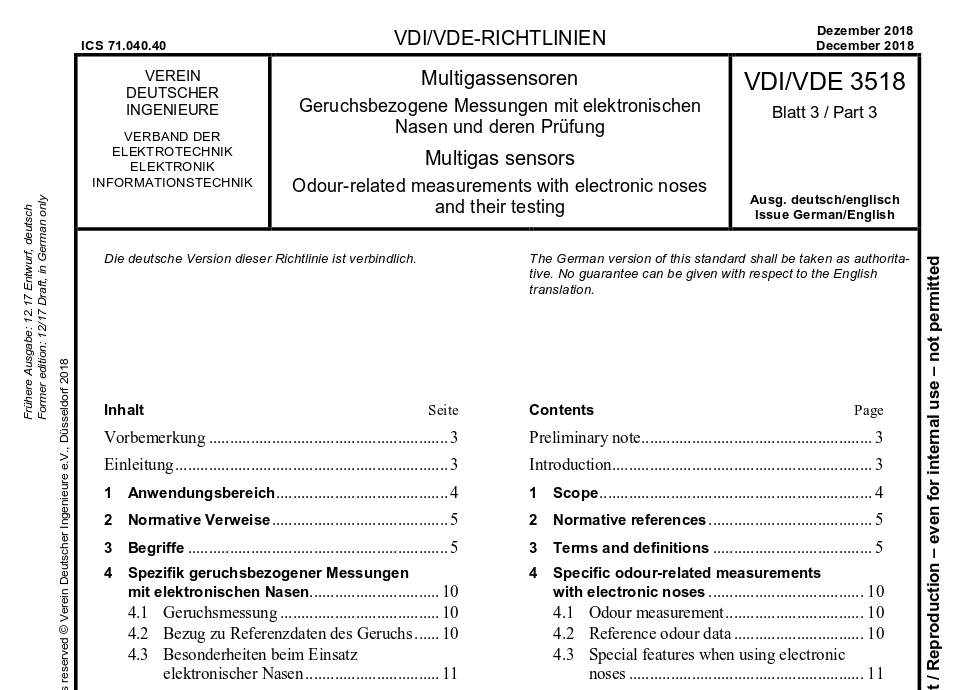 A new German standard on electronic noses and their testing has been published in December. The recent VDI 3518 part 3 on "multigas sensors" is the continuation of the work made in parts 2 and 1 published in 2011 and 2014, respectively. This standard has focused on odour-related measurement, a special case of multigas sensors.
 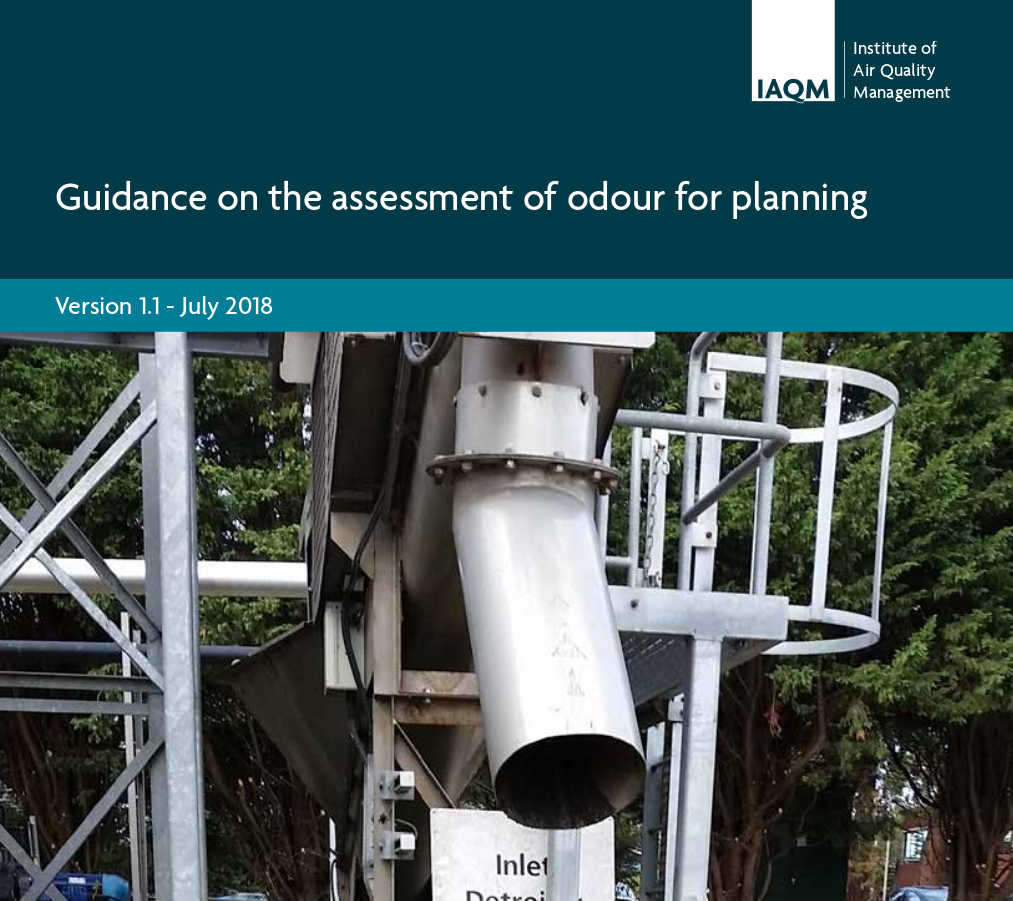 A new version of the Guidance on the assessment of odour for planning has been published. This version is edited by the Institute of Air Quality Management. This version from July 2018 reviews and modify some text, tables and diagrams from the previous version.