VDI/VDE 3518 Blatt 4 ist eine neue technische Richtlinie, die standardisierte Prüfverfahren und Prüfgasgemische für VOC-Detektoren zur Messung der Innenraumluftqualität (IAQ) festlegt. Sie trägt den Titel "Multigas-Sensoren - Standardisierte Prüfanweisungen und Prüfgase für VOC-Detektoren zur Messung der Innenraumluftqualität" und wurde im April 2025 unter ICS 71.040.40 veröffentlicht. Dieser 42-seitige Leitfaden soll die Messungen mit VOC-Detektoren über verschiedene Sensortechnologien und Hersteller hinweg vergleichbar und reproduzierbar machen.

   Der Leitfaden richtet sich in erster Linie an Hersteller von VOC-Detektoren und Multigassensoren, Prüflaboratorien, Zertifizierungsstellen und Experten für Innenraumlufthygiene und Gebäudetechnik. Er bietet einen Rahmen für die Bewertung der Sensorleistung, einschließlich Empfindlichkeit, Selektivität, Ansprechzeit und Langzeitstabilität. Durch die Festlegung von standardisierten Umgebungsbedingungen, Gasgemischzusammensetzungen und Prüfabläufen zielt die VDI/VDE 3518 Blatt 4 darauf ab, eine Methodik zu entwickeln, mit der zuverlässigere Bewertungen der Raumluftqualität erreicht werden können. Ist sie erfolgreich? Lesen Sie weiter, um es herauszufinden.
There is no translation available.

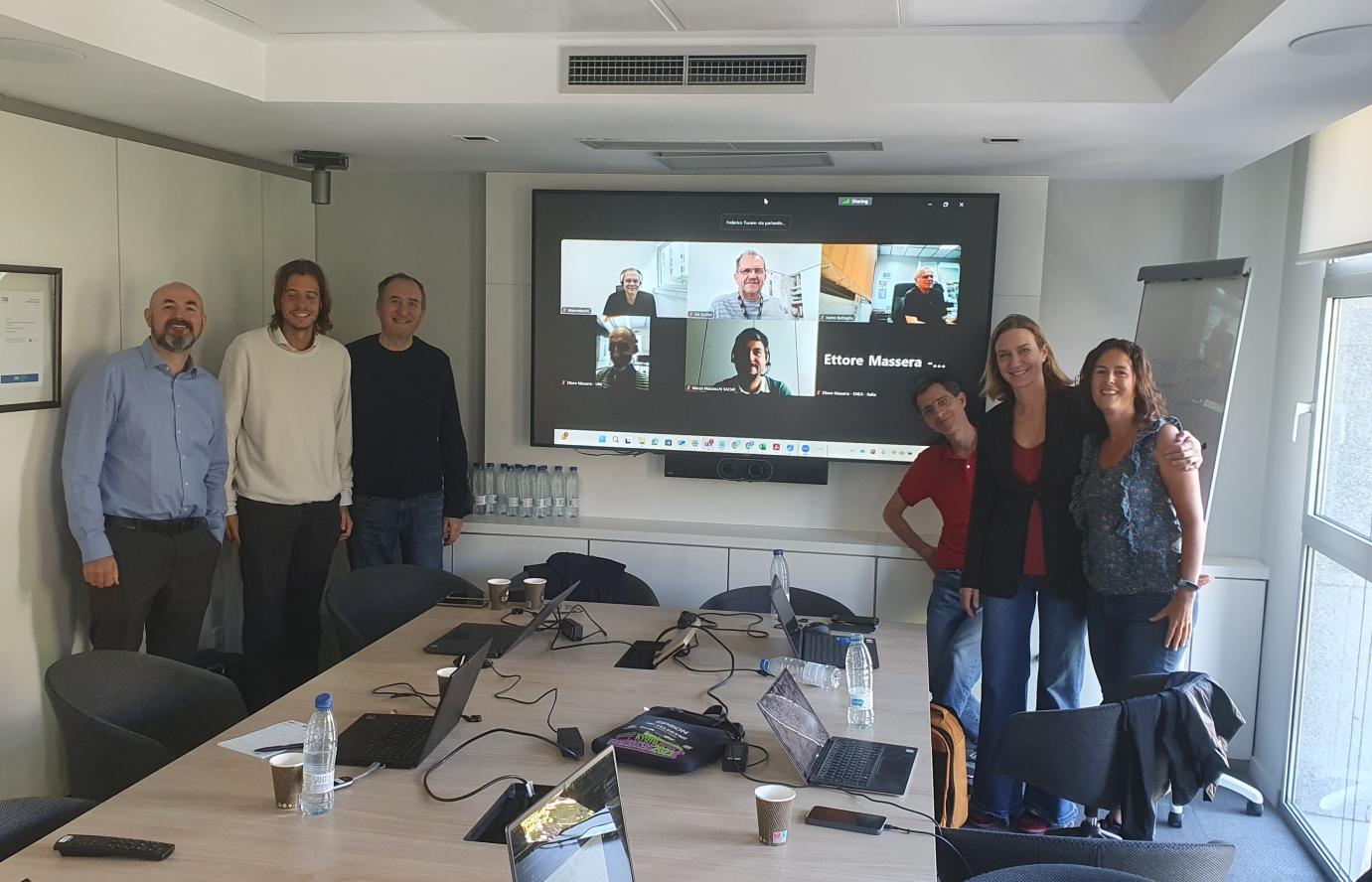
   On September 22 and 23, a new meeting of CEN/TC 264/WG 41, that is, the Working Group 41 of the Technical Committee 264 on Air Quality of the European Committee for Standardization, took place. The agenda for the day included several items, but in the end, draft 3, which deals with field validation, took up most of the group's working hours.

   The WG41 is working in three standards: 1) Instrumental Odour Monitoring Systems (IOMS) - Part 1: Definitions and general aspect; 2) Instrumental Odour Monitoring Systems (IOMS) - Part 2: Technical specifications and QA/QC requirements and 3) Instrumental Odour Monitoring Systems (IOMS) - Part 3: Field validation. This last draft has not been discussed during the second stage of the development of the standard until now. But the experts took the challenge and a text was delivered on time to activate the 3 PWIs, which is the next step in the CEN process.

There is no translation available.

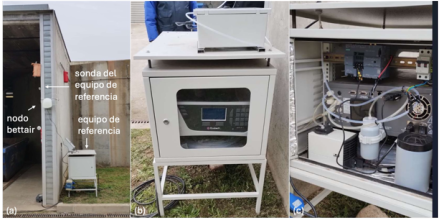
   This project demonstrates that multisensor systems with electrochemical sensors, enhanced by Data Learning models, can accurately and reliably monitor hydrogen sulfide (H2S) in wastewater treatment plants without costly or frequent manual calibration.

   The pilot phase, conducted in early 2024, achieved excellent agreement with reference analyzers, offering a low-cost, low-maintenance, and innovative solution for continuous H2S measurement in WWTPs..

M. Padilla, S. Udina, E. Flores, M. Escribano, F. Ramírez, J. Perelló

  Bettair Cities S.L.

framirez@bettaircities.com

Weitere Beiträge …

All the content here under Creative Commons license