There is no translation available.
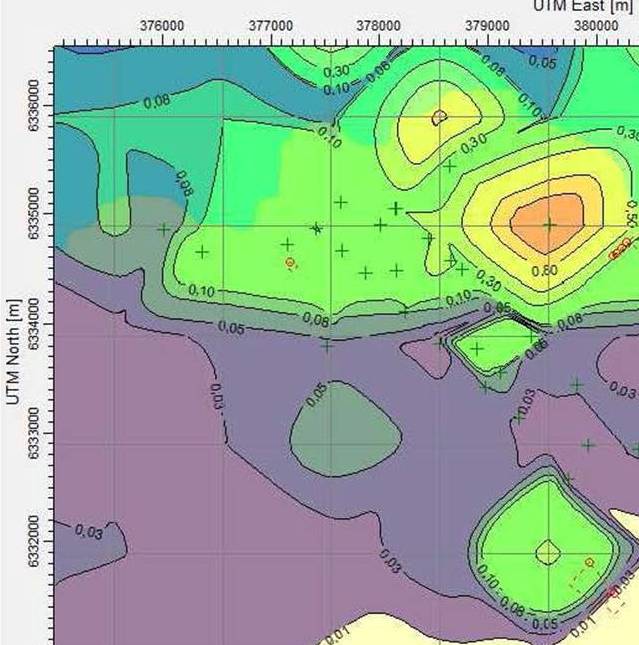 The present work is a joint venture project conducted by the Uruguayan Technological Laboratory (LATU), the National Directorate of the Environment (DINAMA) and the Río Negro’s local government. It consists on the application of different methodologies to address the problem generated by the presence of unpleasant odours in Fray Bentos, Uruguay.
J. Zarauz1, C. Luzardo1, A. Curutchet1, L. Francois1, M. Hill2, P. Kok2 y P. Fernández2 jzarauz@latu.org.uy
1 Laboratorio Tecnológico del Uruguay (LATU) -Uruguay; 2 Dirección Nacional de Medio Ambiente (DINAMA) -Uruguay
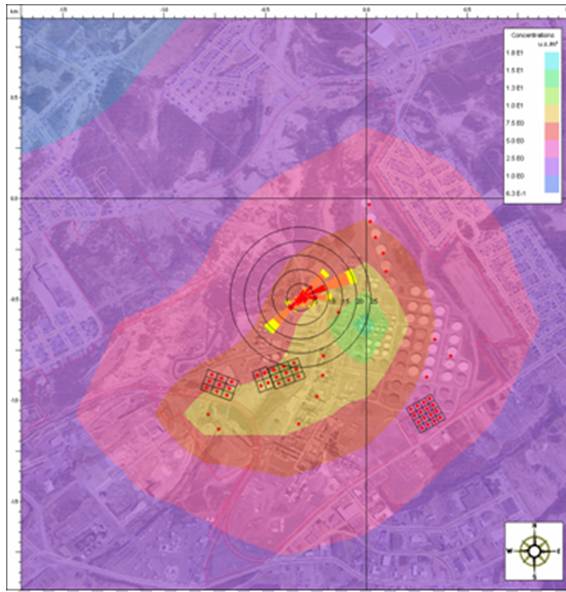 Dispersion modeling defines the relationship between the emission source and the receptor. While control measures may be applied to the emission source, compliance with odor nuisance standards depend on whether the odor concentrations at the receptor have been adequately reduced with respect to their frequency, intensity, duration and location.