| |

We’re doing something new—something a little bit crazy! We’ve reached out to 12 organisations from around the world who share our enthusiasm and sense of fun. Together, we want to shine a spotlight on the word “odour/odor”, raising awareness of it and celebrating the fantastic people working in this field. So, we’re circling the globe, talking about odour/odor for 24 hours straight! Would you like to join us?
The 24-hour Marathon on Odour/Odor Management (24h-MOM) will take place on 12 November 2025. The Call for Content is now open until 1 August. We invite researchers, professionals, and students to submit proposals for presentations at this international event. Interested in taking part? Read on!
Read More
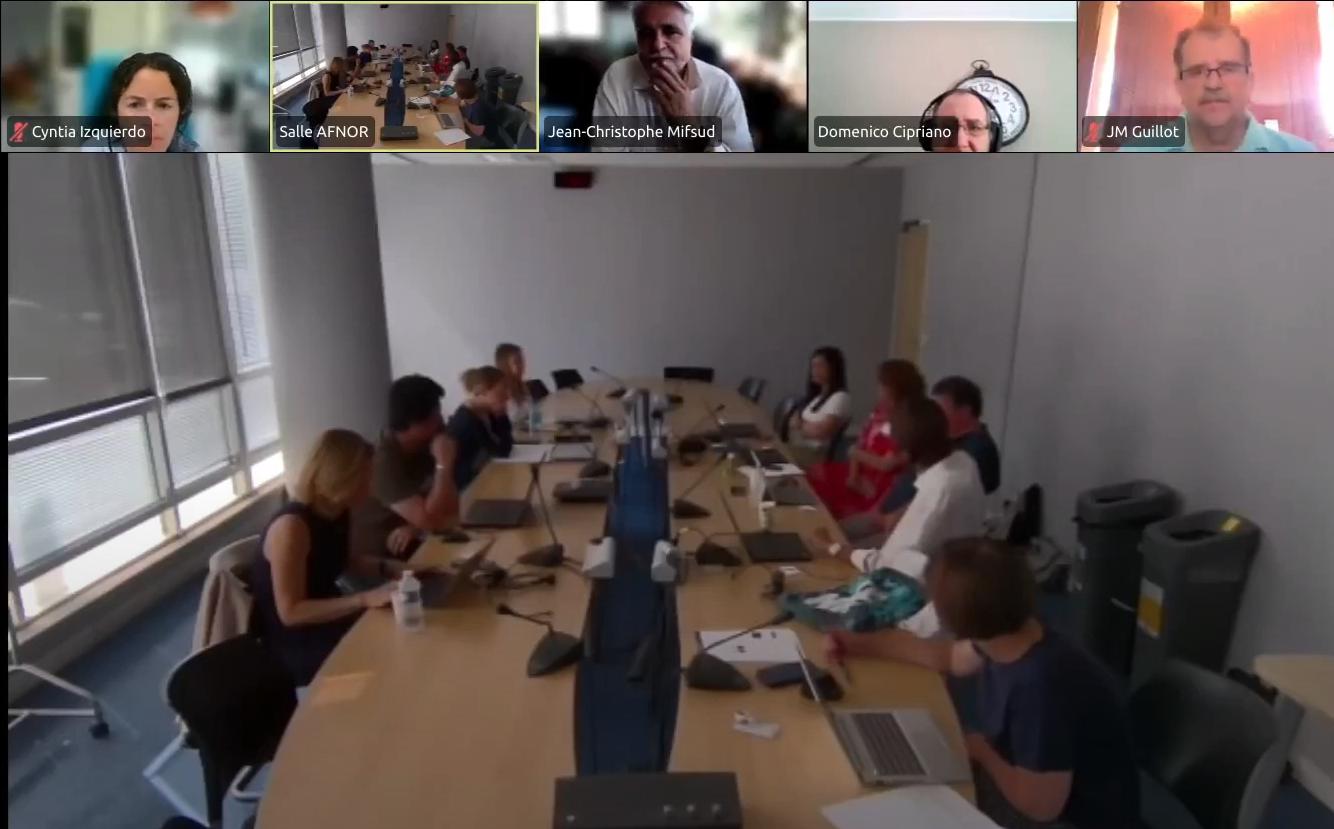
Working Group 41 of CEN convened in Paris (and online) on 16 June this year, with the main focus on resolving comments made to the drafts of Part 1 and Part 2 of the standard for Instrumental Odour Monitoring Systems (IOMS). Part 1 will deal with definitions and general aspects, Part 2 will address technical specifications and QA/QC requirements, and Part 3 will cover field validation. This is the second attempt by Working Group 41, following an earlier effort that was not successful.
A week ago, the WG41 group gathered in Paris to discuss the progress of the two drafts currently in development. The group has been working for over three years on the first CEN standard for Instrumental Odour Monitoring Systems. On this occasion, the group reviewed around 150 comments, with over 110 coming from the Spanish mirror group.
Read More
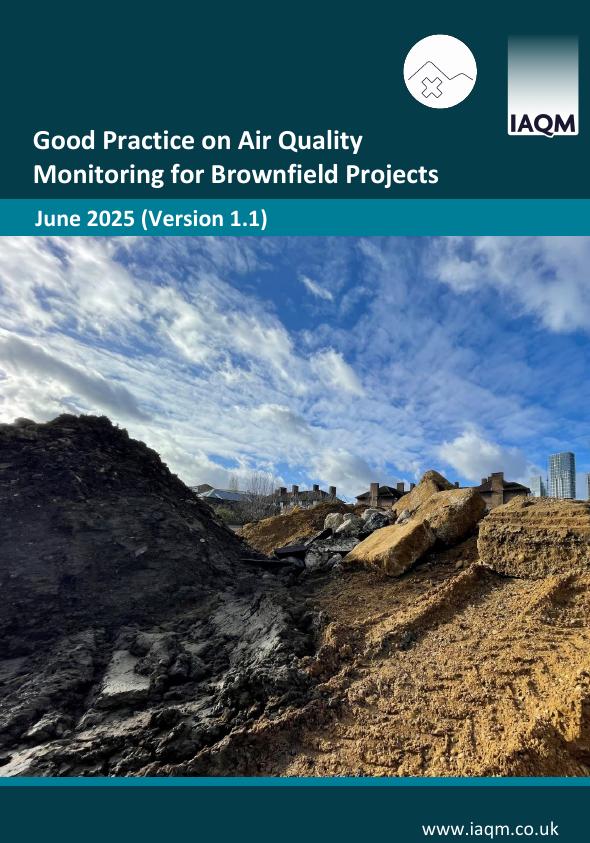
The Institute of Air Quality Management (IAQM) has announced an open consultation period for its newly developed guidance, "Good Practice on Air Quality Monitoring for Brownfield Projects." This document has been collaboratively created by a dedicated cross-sector working group, comprising members from the IAQM itself and the IES Land Condition Community and it is now open for comments. The consultation period will be for four weeks and will close at 5pm on Monday 15th July.
Sites that previously hosted an industrial plant (known as Brownfield sites), present valuable opportunities for revitalizing inner city areas and supporting urban growth. In the UK, planning policy encourages a “Brownfield First” approach, prioritizing the redevelopment of previously used land. However, these sites often require extensive cleanup to address contamination—particularly from hydrocarbons and chlorinated compounds—which, if left untreated, can seep into the soil, groundwater, and surface water, posing environmental risks. Often these areas emit odours that could affect people living in that area after development.
Read More
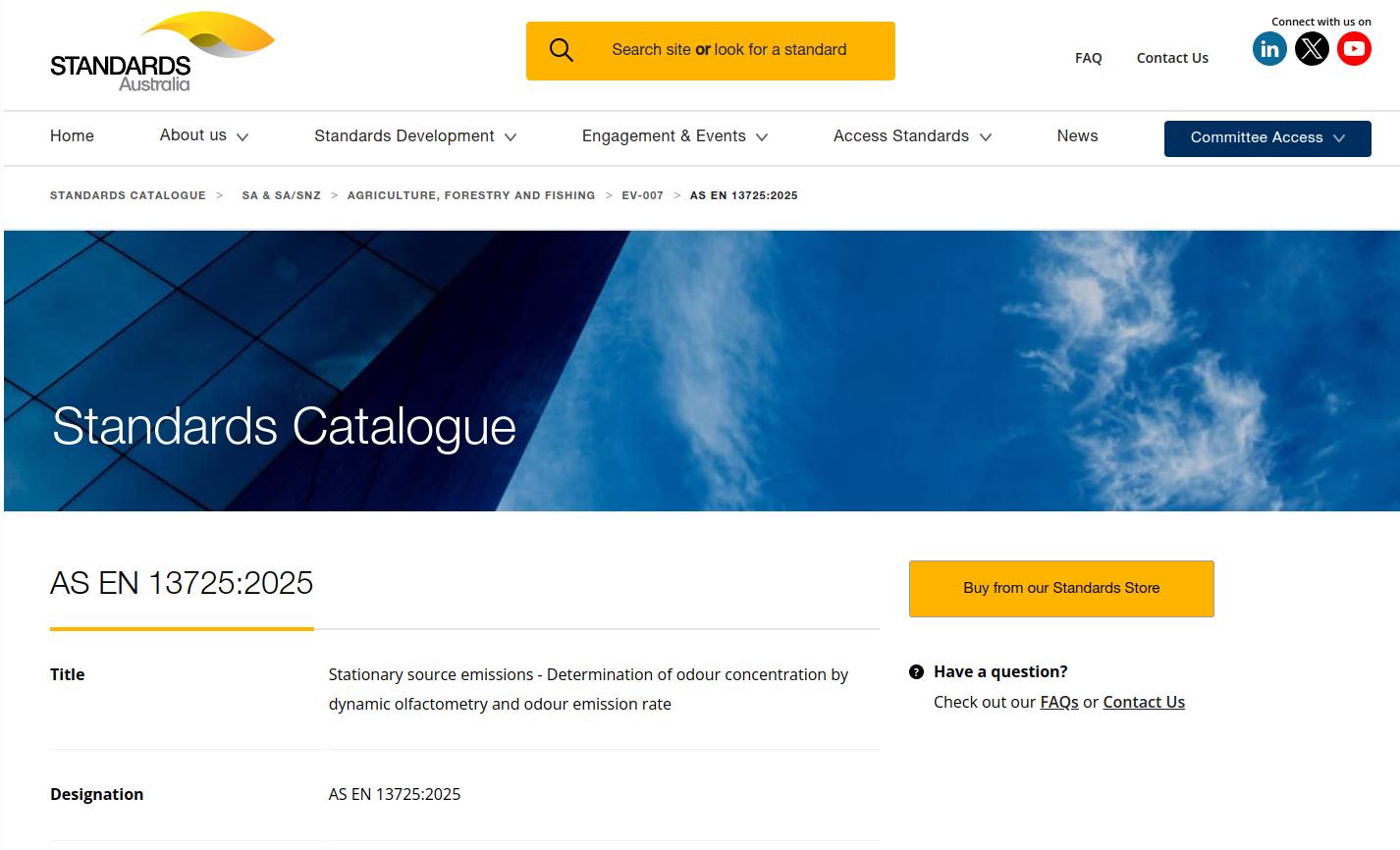
Australia has recently adopted the EN 13725:2022 standard for odour measurement, aligning its methodology with the latest European standard. The new AS EN 13725:2025 replaces the older AS/NZS 4323.3:2001, which was based on the 2003 European standard. The change introduces updates in calibration, uncertainty assessment, and sampling procedures.
For those involved in environmental monitoring and odour assessment, understanding this update is important. The adoption of a transposed standard means that Australia now uses the same methodology as Europe, ensuring consistency in measurements.
Read More
SPECIAL CONFERENCE ODORA'24
As you probably know, Olores.org organized the ODORA'24 Conference on November 5-6, 2024, at the BEC, Barakaldo, Spain. These events bring together engineers, scientists, researchers, students, local authorities, managers, and other professionals to address and discuss emerging odor problems. More than 120 people, coming from 9 different countries, attended this event, and more than 30 papers were presented.
That said, we are happy to gradually share the abstracts of the papers presented, as well as the videos and PPT files in Spanish of those who have given their permission to publish them.
Enjoy the reading!

Traditional methodologies for evaluating odour pollution are effective in most cases but insufficient for complex situations with multiple sources and various odours.
OdourCollect, developed by Science for Change, offers a comprehensive citizen science-based solution for odour monitoring and management, complying with the UNE 77270:2023 standard. The platform centralizes information and enables real-time analysis, encouraging citizen participation and integrating additional data for improved decision-making.
Rosa Arias. Johana Burbano
Read More

Unpleasant odours in workplaces can cause discomfort, affect workers’ physical and psychological well-being, and reduce productivity, although they are not considered a direct indicator of toxicity, and there is no specific regulation for their control.
Nevertheless, the presence of bothersome odours can lead to symptoms such as headaches or nausea in some individuals. To address the issue objectively, in 2023 a group of volunteer experts reviewed international methodologies and decided to implement a guide based on the German method and the calculation of the Odour Activity Value (OAV) to estimate the impact of the main odorants in various activities.
Gloria Sánchez*, Carlos Díaz, Ainhoa Anton, Jordi Gascon, Rodrigo Rosales, Ana Oubiña, Antonio Amo, Marc Vinot, Macarena Segarra, Irene Lara, Johana Burbano
Read More

The Pinedo WWTP, serving over 1.5 million people across 18 municipalities near Valencia, has faced significant challenges due to odour issues affecting nearby communities.
To address this, the facility has implemented an innovative project combining advanced monitoring tools, such as real-time hydrogen sulphide and noise surveillance, dynamic olfactometry, odour forecasting software, and citizen science initiatives, to effectively identify and mitigate nuisance impacts. This integrated approach not only enhances technical control but also fosters greater transparency, participation, and trust with local residents.
C. Lafita1*, L. Saúco2, F. Andrés1, A. Jiménez2, E. Albors1
Read More

With the new odour standard for swine facilities in Chile, Maxagro and the industry face the challenge of advancing towards sustainable production and managing community expectations.
Despite technological investments that have reduced odours by over 75%, the perception of low-level odours can still lead to complaints. Maxagro actively works with the community to improve understanding and social well-being.
E. Ellmen
Read More

Meteorological Eulerian models like WRF, combined with Gaussian and Lagrangian dispersion models, are commonly used to assess odor impact from emissions measured by dynamic olfactometry, with four specific models (PMSS, GRAL, CALMET/CALPUFF, and AERMOD) tested for performance evaluation.
The choice of model must be tailored to the specific environmental conditions, source characteristics and project objectives, so no one model is universally superior to others. This nuanced understanding of model applicability is vital to the effectiveness of odor management strategies in various environments, including urban and industrial settings.
R. Cerdá1*, O. Carter2, C. Dupuis3, L. Ricolleau3, C. Pozzi4, D. Valiño1
Read More

This guide is designed to help municipalities create ordinances to regulate and control nuisance odors as part of their legal responsibility to manage urban environmental quality.
Under Article 25 of Law 7/1985 (as amended by Law 27/2013), municipalities must manage the urban environment—including protection from noise, light, and air pollution—according to state and regional laws.
G. Arisa1, R. Sánchez2, C. Izquierdo3, J. Burbano4, A. Amo5
Read More

This project developed a methodology using the NASAPP web platform to monitor and analyze odor pollution from a waste management plant in a residential area.
By combining trained-user data with public participation and advanced analysis, it created an odor impact index and facilitated transparent stakeholder communication. The approach reduced odor complaints by 80% and established a replicable model for environmental conflict resolution, emphasizing community-company-authority collaboration.
de Lucas, I.1*; Vallse, T.2; Ribasése, E.2
Read More
Read older Newsletters here.
|
|


