 In this work, a new biotechnology based on latex biofilms was developed and tested for VOC abatement in the context of indoor air. Four VOCs – hexane, trichloroethylene, toluene and pinene – of different solubilities were selected as model pollutants. A mixed bacteria culture enriched from activated sludge was used as inoculum for the experiments. The removal efficiency (RE) of the pollutants was evaluated for different biofilm mixtures, which involved variations in the water content, the presence of water retainers, the latex pre-treatment, and the biomass concentration.
Additionally, the influence of the pollutant load was tested. Overall, toluene and pinene REs were high (<90%), while hexane and trichloroethylene did not achieve satisfactory REs (<30%). A high-water content in the latex-biofilm mixture was proven to increase the abatement, especially when provided as nutrient solution.
 An Odour Attribution Study is undertaken in North America for an Air Quality Management Agency that includes athering data from specific sources and ambient locations to better understand odour impacts within the local communities. Specifically, the following objectives were to be met:
 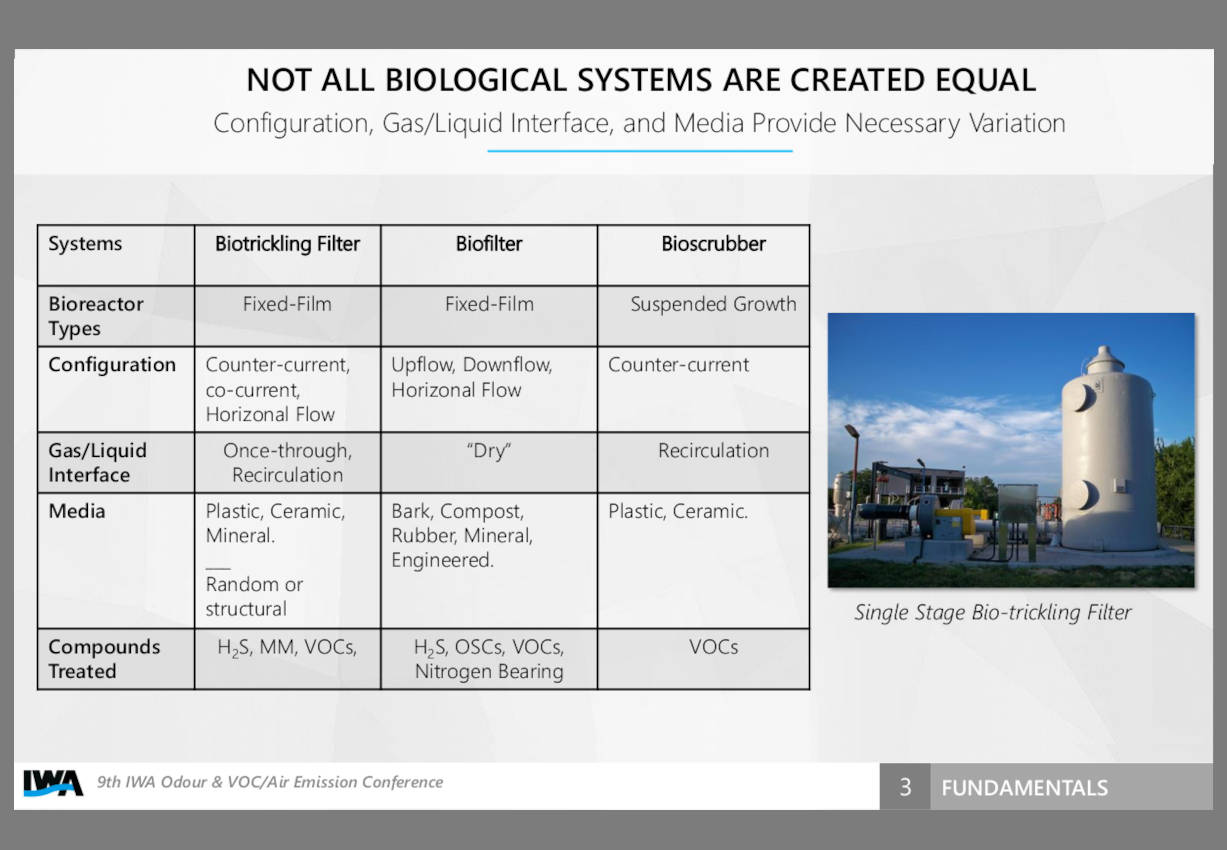 Biofiltration is not a one-size-fits-all technology. In order to properly design the biological odour control process, the foul air source needs to be accurately characterized. The optimal biological odour control configuration will depend strongly on the compounds contributing to odour. Considering the application of biological odour control to wastewater treatment plants specifically, this paper first describes the most common odorous compounds and how each can be biologically degraded.