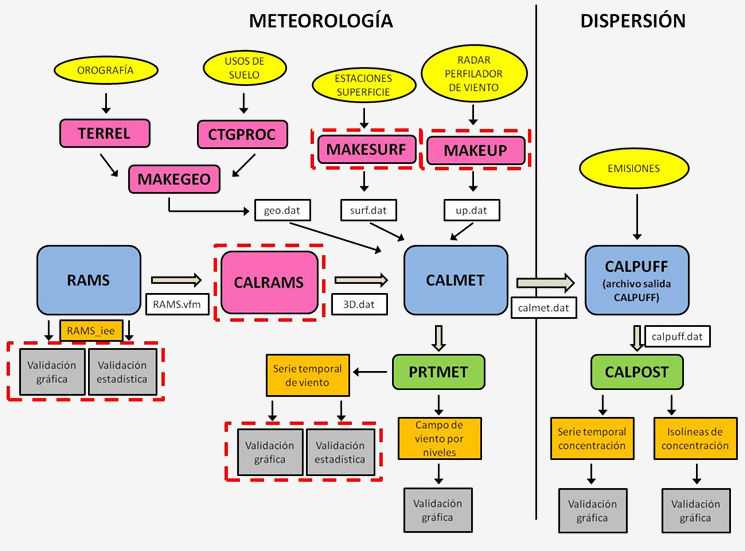
 The current problems in relation to odor pollution episodes make it necessary to have methods to assess odor impacts. Such assessment can be performed using dispersion models that allow to estimate odor concentrations considering the emissions, the meteorology and the topography, among other data.
Pollutant dispersion modeling is usually based on minimum averaging times of one hour; however, some pollutants require shorter averaging times, as it is the case of odors. Recently, the Atmospheric Research Group of the Faculty of Engineering of Bilbao has set up a methodology to perform dispersion studies using sub-hourly temporal resolution.
P. Uriarte*, V. Valdenebro, E. Sáez de Cámara, G. Gangoiti and M. Navazo.
Universidad del País Vasco / Euskal Herriko Unibertsitatea (UPV/EHU), Escuela Técnica Superior de Ingeniería de Bilbao, Alameda Urquijo s/n, 48013 Bilbao.
*puriarte002@ikasle.ehu.eus
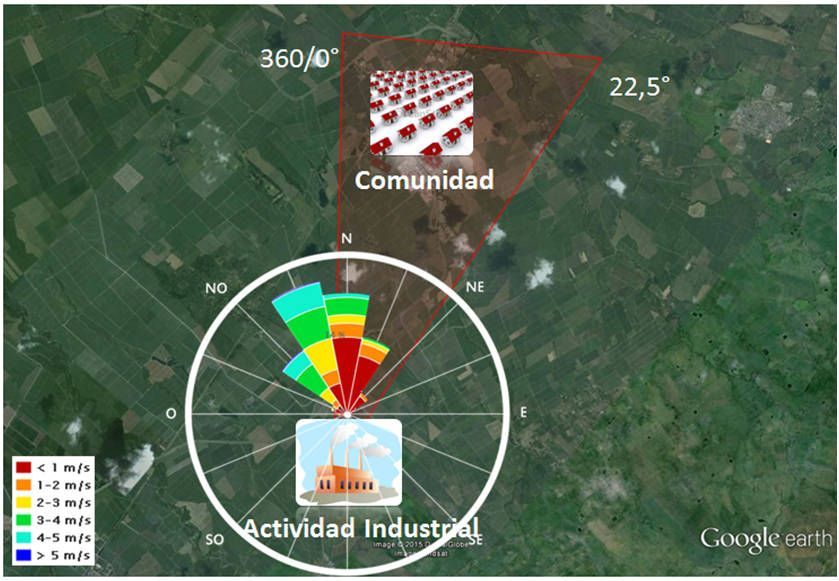 While there is currently a huge gap between odor and gases, since the smell is a complex mixture of gases which are capable of interact between each other. Therefore various gaseous compounds might generate different odorant stimuli than the single gas compound, so you may consider that monitoring gaseous emissions as a valid alternative as an operational tool.
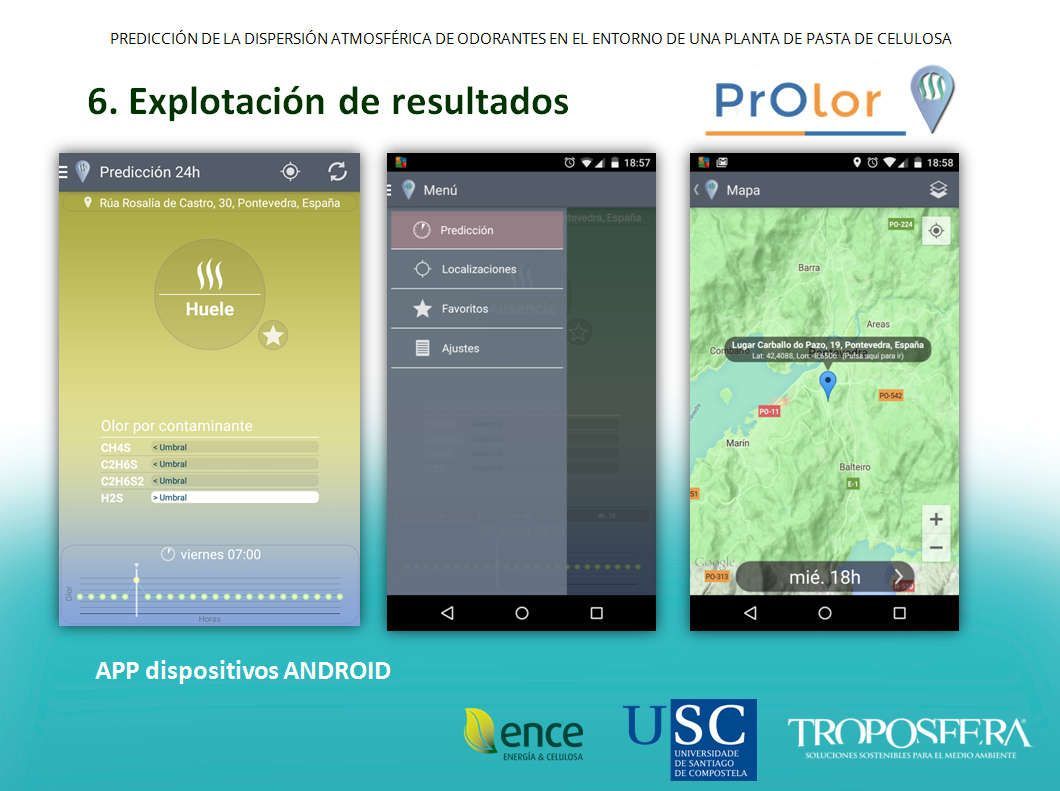 Traditionally, pulp mill plants using Kraft process produce TRS (Total Reduced Sulphur) odorants emissions; this is the case of ENCE-Pontevedra plant.