 As you probably know, the International Environmental Society of Odour Managers (AMIGO) and a nice bunch of other groups and experts is promoting the development of a new Spanish Standard on odour nuisance mapping through citizen science. Last meeting took place online on the 27th of May, and the first draft of this standard is close to be ready. This would be the first standard on advanced psychometry, dealing with odour mapping by using citizen science to our knowledge.
The roadmap for this initiative is to serve as a first standard on mapping annoyance to drive a wider standardization process at a European scale, and from that go to ISO. It aims also to be a guideline for anyone interested in carrying on a citizen science study focused on odour impact.
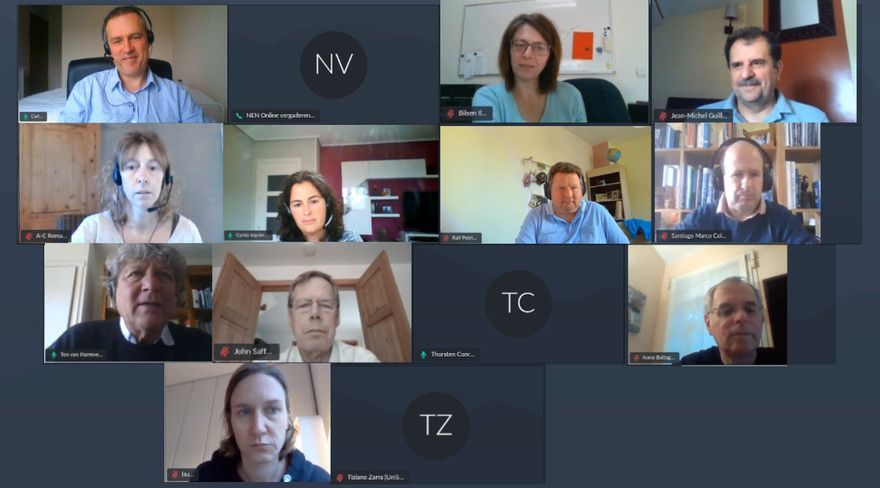 The 16th meeting of the Working Group (WG) 41 of the European Standardization Committee took place at the end of April A couple of intensive days with online meetings due to the Covid-19 measures taken by most European countries at that stage. A nice session of statistics and mathematics took place during those days, with the Chebyshev's inequality and the Bland–Altman plot as stars of these sessions.
  This paper presents a methodology that generates complex flow fields based on the Navier Stokes equations for fine-mode trajectory modelling. Initial u- and v-component of wind is input to the model from an onsite weather station on a 2-minute resolution.