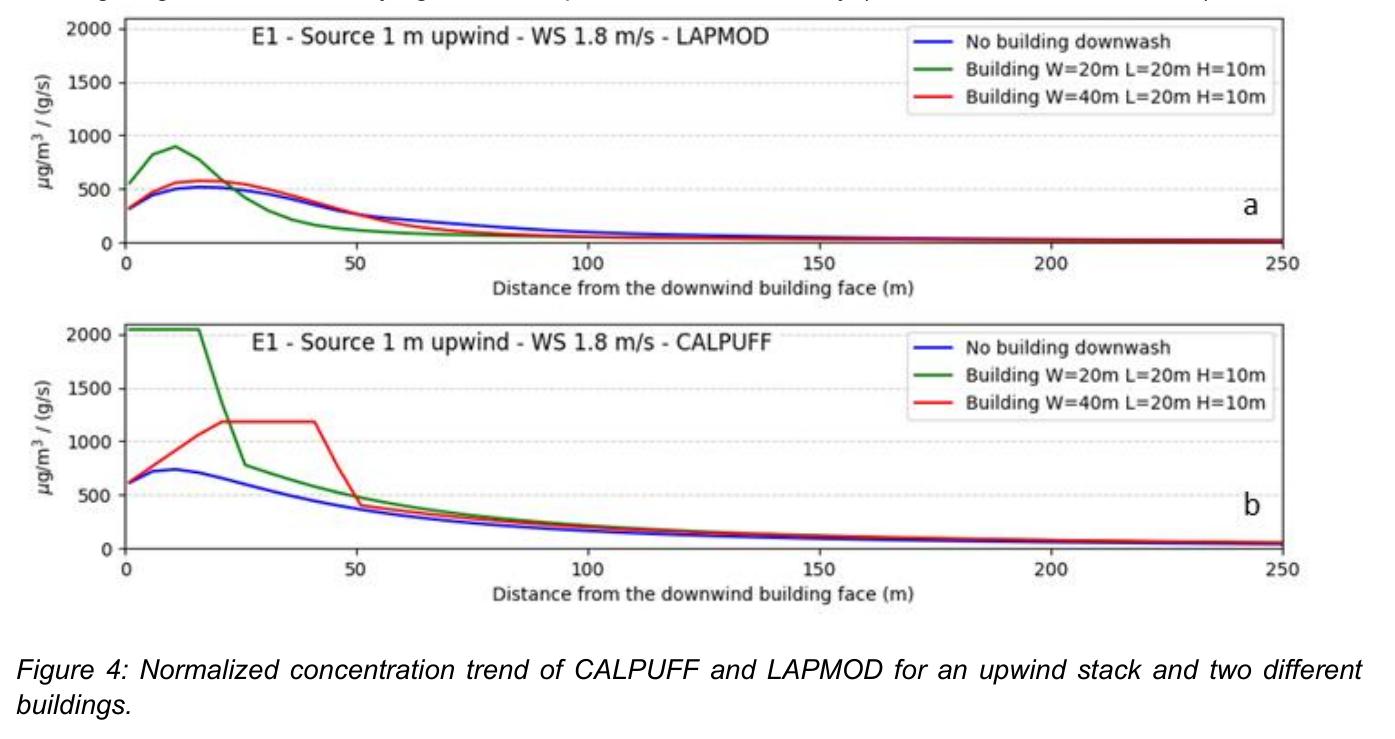
Model cząsteczkowy LAPMOD typu open source, oparty na metodzie Lagrange’a, uwzględnia obecnie w swoim algorytmie efekt strumienia powietrza opadającego od budynków w połączeniu z modelem PRIME2. Zaprojektowany z myślą o modelowaniu zapachów, model ten uwzględnia zjawisko spływu powietrza w dół na poziomie cząstek dla źródeł punktowych, obszarowych i objętościowych, eliminuje konieczność wstępnego przetwarzania danych metodą BPIP oraz pozwala uniknąć nierealistycznych obszarów o „stałym stężeniu”, które mogą pojawiać się w starszych schematach.
Na oddziaływanie zapachów decydujące znaczenie mają zjawiska zachodzące w odległości od kilkudziesięciu do kilkuset metrów od źródła. W tym polu bliskim budynki mogą spychać smugi zanieczyszczeń w dół, wzmacniać turbulencje i tworzyć strefy recyrkulacji, które silnie wpływają na stężenia na poziomie gruntu w pobliżu receptorów. Jeśli model dyspersji błędnie odwzorowuje strumień spływający z budynku, może łatwo zaniżyć lub zawyżyć właśnie te stężenia, które decydują o tym, czy sąsiedzi będą składać skargi, czy też nie. To sprawia, że wybór schematu strumienia spływającego ma kluczowe znaczenie dla ocen zapachowych w pobliżu oczyszczalni ścieków, kompostowni, zakładów przetwórstwa spożywczego i innych obiektów o złożonym układzie.
 The website of the Support Center for Regulatory Atmospheric Modeling (SCRAM) no longer includes the CALPUFF model as a recommended dispersion model. This means that one of the most widely dispersion model used for odour modelling is not recommended by the US EPA any more. This decision has serious consequences for the odour community.